
MADRID, SPAIN — England's extraordinary 3–2 victory over Spain was supposed to be remembered as a magnificent statement of intent from Thomas Tuchel's side.
Instead, a controversial refereeing decision has added another explosive dimension to one of the most dramatic UEFA Nations League encounters of the year.
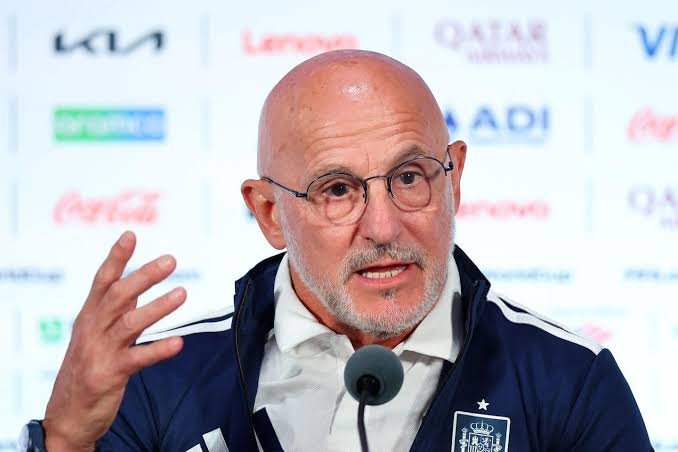
Spain head coach Luis de la Fuente watched his team fight desperately to recover from a three-goal deficit, only to suffer a devastating defeat that ended their remarkable unbeaten run.
But the final score tells only part of the story.
Questions surrounding England's opening penalty, a lengthy VAR examination and the officials' handling of crucial moments have left supporters with a fiercely divisive question:
Did England simply deserve their victory, or did one crucial refereeing decision help change the course of the contest?
And with Thomas Tuchel adamant that England earned their triumph, the argument is far from straightforward.
🔥 THE MOMENT THAT CHANGED EVERYTHING
The atmosphere inside Madrid's Metropolitano Stadium was electric as two of Europe's strongest national teams battled for control of their Nations League group.
England began with remarkable confidence, pressing aggressively and forcing Spain into uncomfortable situations.
However, the first major flashpoint arrived shortly before half-time.
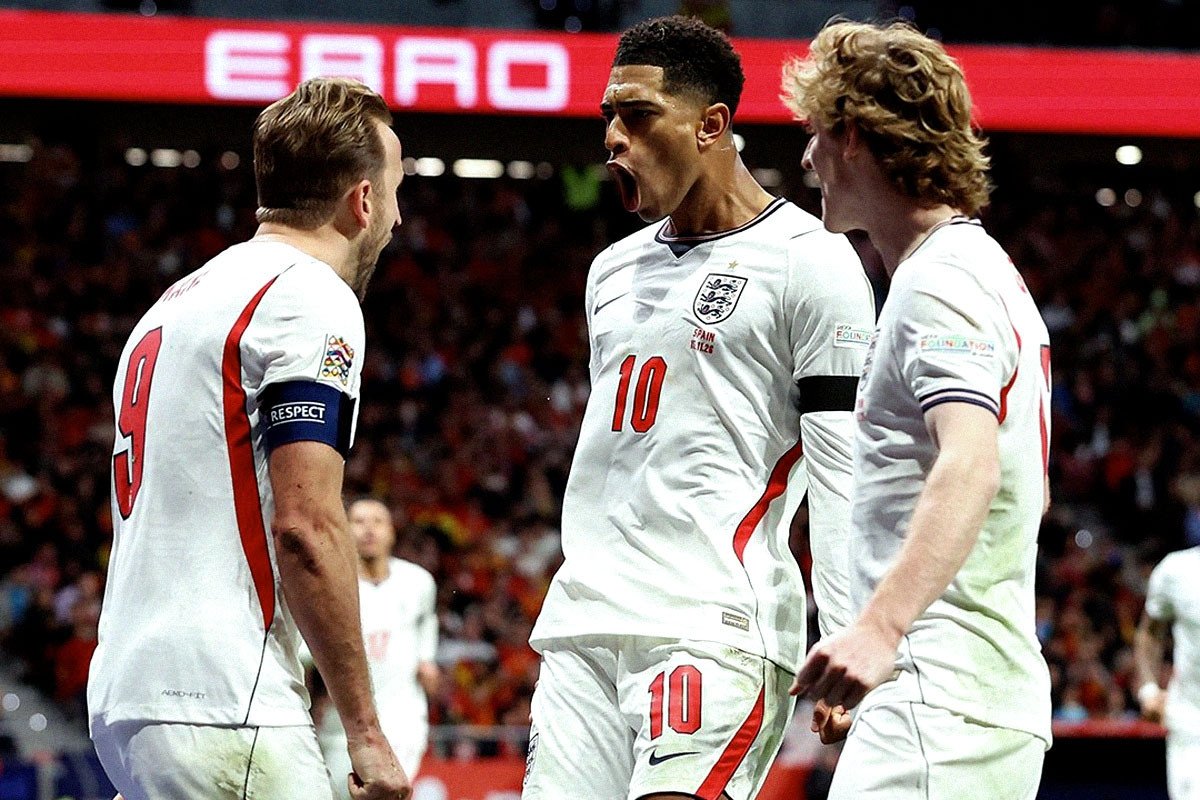
Harry Kane was awarded a penalty following a challenge by Pau Cubarsí inside the Spanish penalty area.
Yet the decision was not entirely without controversy.
Before the penalty incident, questions arose over a possible foul by Elliot Anderson on Marc Cucurella during the attacking move.
VAR examined the sequence, but the penalty decision stood.
Kane subsequently converted, handing England a crucial advantage.
For England supporters, it was a legitimate reward for sustained attacking pressure.
For those questioning the decision, however, the incident raised an uncomfortable possibility: could the entire sequence have unfolded differently had an earlier foul been awarded?
It was precisely the sort of moment capable of dividing football supporters long after the final whistle.
⚡ SPAIN COLLAPSE AS ENGLAND DELIVER TWO DEVASTATING BLOWS
Any suggestion that England relied entirely on refereeing decisions would ignore what happened next.
Tuchel's side returned after half-time with ruthless attacking intent.
Ezri Konsa doubled England's advantage in the 53rd minute, heading home from a Declan Rice corner.
Four minutes later, Ben White completed another impressive attacking move to make it 3–0.
Suddenly, Spain were staring at a humiliating home defeat.
The Metropolitano fell into disbelief.
England were playing with confidence, organisation and clinical precision.
De la Fuente's team, meanwhile, appeared unable to find answers.
But football has a remarkable ability to turn certainty into chaos.
And the drama was only beginning.
🚨 RED CARD, PENALTY AND AN EXTRAORDINARY SPANISH COMEBACK
In the 63rd minute, everything changed.
England midfielder Elliot Anderson received a red card after fouling Lamine Yamal as the Spanish youngster threatened to break through on goal.
Spain were awarded a penalty.
Mikel Oyarzabal converted, reducing the deficit to 3–1.
Then, in the 75th minute, Nico Williams struck again.
Spain 2–3 England.
What had appeared to be a comfortable victory became an increasingly desperate battle for survival.
Spain attacked relentlessly.
England defended with determination.
Goalkeeper James Trafford produced vital saves as the hosts pushed for an equaliser.
Every Spanish attack brought renewed anxiety for England.
Every intervention by an English defender felt increasingly significant.
Yet despite Spain's extraordinary late pressure, the final breakthrough never arrived.
💥 DE LA FUENTE AND THE QUESTION THAT REFUSES TO DISAPPEAR
For Luis de la Fuente, the disappointment was enormous.
Spain had dominated possession overall and recorded significantly more attempts than their opponents.
Advertisement
But their comeback was insufficient.
In a dramatized interpretation of the post-match controversy, the Spanish manager's frustration can be expressed through the following imagined statement:
"We did everything we possibly could to win, but certain factors beyond our control ultimately decided the outcome of this match."
The statement is fictional, not a verified quotation from De la Fuente.
Advertisement
Nevertheless, it captures the argument at the centre of the debate.
How much influence should a controversial decision have on the way a football result is remembered?
And when a team loses by a single goal, how heavily should an earlier VAR incident weigh in the final judgement?
Some observers may argue that Spain suffered because of defensive mistakes and England's superior finishing.
 Others may believe the incident preceding Kane's penalty deserves greater scrutiny.
Neither argument automatically establishes that the officials acted improperly.
But the disagreement highlights why refereeing decisions remain among football's most emotionally charged subjects.
🔥 THOMAS TUCHEL RESPONDS — AND HIS MESSAGE IS UNMISTAKABLE
Advertisement
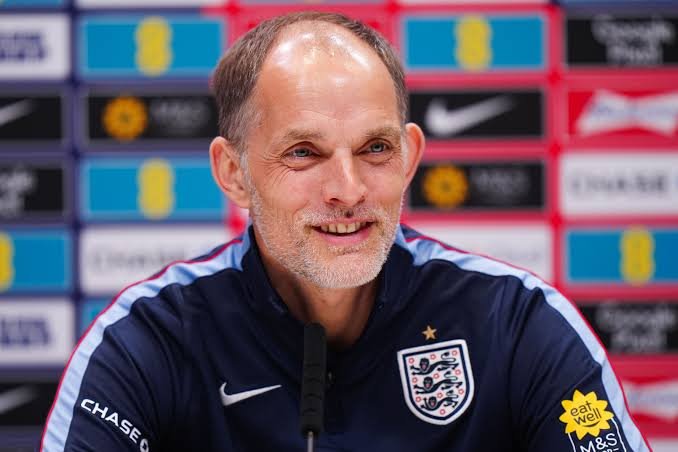
Thomas Tuchel, however, offered a very different interpretation of England's performance.
Speaking after the match, the England manager insisted that his players had earned their victory through their quality, commitment and collective determination.
He described the result as a statement victory and emphasised that England fully deserved their three-goal advantage.
For Tuchel, the performance — rather than the controversy — was the defining story.
Advertisement
His position was clear: England had demonstrated their superiority for much of the contest and then shown remarkable resilience after being reduced to ten men.
It is a powerful counterargument.
After all, England not only scored three times against the world champions but also survived almost half an hour under intense pressure with a numerical disadvantage.
Advertisement
Whatever questions surround the opening penalty, Spain were subsequently awarded their own spot-kick, while England lost Anderson to a red card.
That makes any suggestion of a straightforward refereeing advantage considerably harder to sustain.
⚽ ONE RESULT, TWO COMPLETELY DIFFERENT STORIES
England leave Madrid with a famous victory, first place in their Nations League group and renewed confidence under Thomas Tuchel.
Spain leave with disappointment, frustration and painful questions about how their unbeaten run ended.
But the larger debate goes beyond a single evening.
Should supporters judge matches solely by the scoreboard?
Or should controversial moments be subjected to deeper scrutiny, even when the winning team produces an outstanding performance?
England won 3–2. That result is beyond dispute.
Whether every pivotal decision was correct is a separate question.
And for supporters determined to revisit the decisive moments, this extraordinary encounter offers plenty to discuss.
One historic victory. One heartbreaking defeat. And one refereeing flashpoint that threatens to dominate the conversation.
The question remains: did England simply outplay Spain when it mattered most — or was the most consequential moment of the night decided before Kane even stepped up to take his penalty?